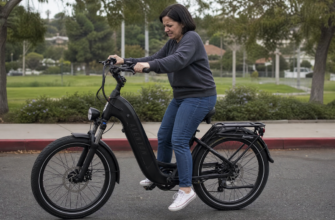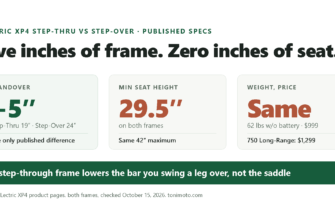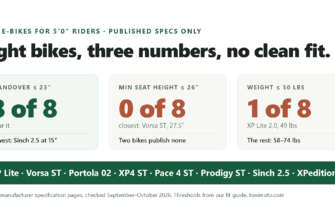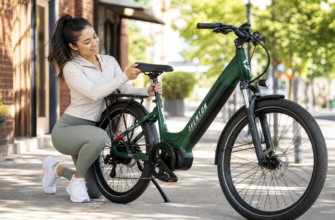
A test ride tells you more about fit in 10 minutes than specs can in 10 hours. But most people don’t know what to focus on. They ride around the block, think “this feels nice,” and buy. Then they discover the problems after the return window closes.
This is a structured 10-minute checklist specifically for short riders. Print it, screenshot it, or memorize it before you test ride.

Before You Ride (2 Minutes)
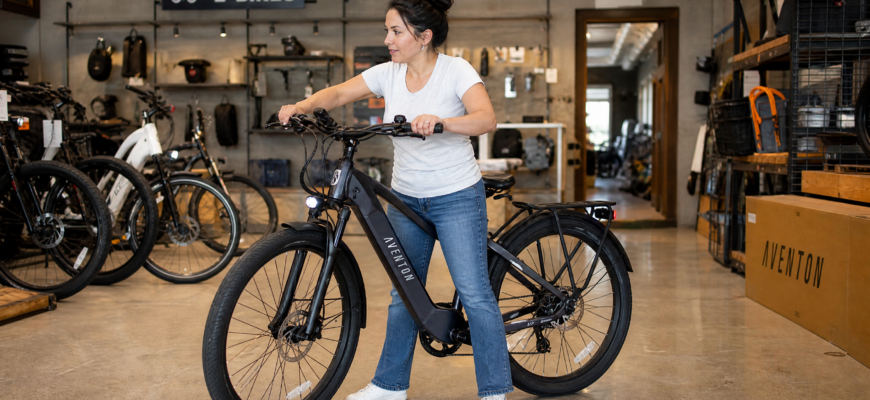
Saddle to minimum: Ask the shop to lower the saddle as far as it goes. Sit on the bike. Can you touch the ground with the balls of both feet? Not toes — balls. If you’re on tiptoes at minimum saddle height, the bike doesn’t fit. Full stop.
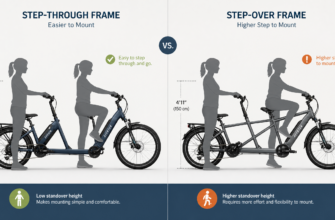
Stand-over check: Stand over the frame with both feet flat. Is there clearance above the top tube? For step-through frames, skip this — you’ll have clearance regardless.
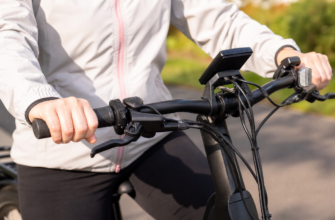
Reach check (stationary): With both hands on the grips, are your elbows slightly bent? Shoulders relaxed? If your arms are fully extended or your shoulders are hunching up, the reach is too long. Note this — it might be fixable with a shorter stem, or it might mean the bike is simply too long.
Brake lever reach: Can you wrap two fingers around each brake lever and pull it to a firm stop without straining? If your fingers barely reach, check for an adjustment screw on the lever (hydraulic brakes usually have one). If it’s mechanical brakes with no adjustment, that’s a fit problem with no easy fix.
First 5 Minutes: Slow Riding
Low-speed stability (parking lot speed): Ride at walking pace. Does the bike feel balanced, or are you fighting to keep it upright? Heavy e-bikes are hardest to control at low speed, and lighter riders feel this more. If you’re weaving and wobbling under 5 mph, the bike may be too heavy for you.
Motor startup: Start from a complete stop. Does the motor engage smoothly (torque sensor) or does it lurch forward (cadence sensor with a delay)? For short riders, lurching starts are more destabilizing because you have less weight to counterbalance. If the start feels jerky, consider whether you can manage it daily.
Stop and foot-down: Ride slowly, then stop and put a foot down. How does this feel? Can you do it confidently without the bike tipping? Do this 3-4 times. This is the maneuver you’ll do at every red light — it needs to feel automatic.
Next 5 Minutes: Real Riding
Shoulder and neck check: After 5 minutes of riding, do your shoulders feel tense or raised? Is your neck craning? These are reach problems that will get worse over time, not better.
Hand comfort: Are your wrists at a neutral angle on the grips? Are you gripping too tightly because you feel unstable? Tight grip often means the bike is too heavy or the cockpit fit isn’t right.
Braking confidence: Ride at 15 mph and brake firmly. Do the levers feel like they’re within comfortable reach? Can you stop quickly and put a foot down? If braking feels tentative because you’re reaching for the levers, this is a safety issue.
Turn test: Make a few U-turns in a parking lot. Is the bike maneuverable, or does it feel like steering a boat? Heavy, long-wheelbase bikes are harder to turn at low speed for lighter riders.
Decision Framework
3+ green flags = consider buying. The foot-down feels natural, brakes are reachable, shoulders are relaxed, and low-speed handling feels stable. Minor reach issues can be fixed with a shorter stem.
1-2 yellow flags = fixable, maybe. Reach is slightly long (shorter stem might fix it). Brakes reach slightly far (adjust the set screw). Weight feels manageable but not easy.
Any red flag = don’t buy. Can’t touch ground with balls of feet at minimum saddle height. Brakes feel unsafe. Bike feels uncontrollably heavy at low speed. Low-speed stopping feels dangerous.
Need to measure yourself before a test ride? Our fit checklist →
Ready to narrow the field? Our fit-first picks →