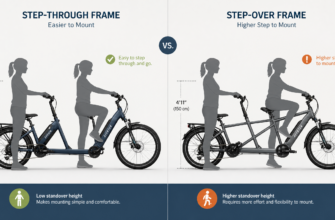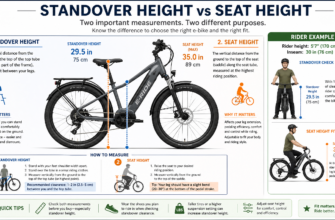
Before you spend $800–$2,000 on an e-bike, spend 5 minutes with a tape measure. These four body measurements — compared against the bike’s geometry — will tell you more about fit than any size chart ever will. This is especially important for riders 5’0″–5’5″, where a single inch can mean the difference between comfortable and unsafe.
Checking a specific bike? Our e-bike standover height database lists every published standover figure we can source from manufacturer specs, sorted lowest first — plus the popular models that publish no figure at all.
You’ll need: a tape measure, a hardcover book, a wall, and someone to help (or a mirror). Wear the shoes you’d ride in.
Measurement 1: Height (Stand Barefoot)
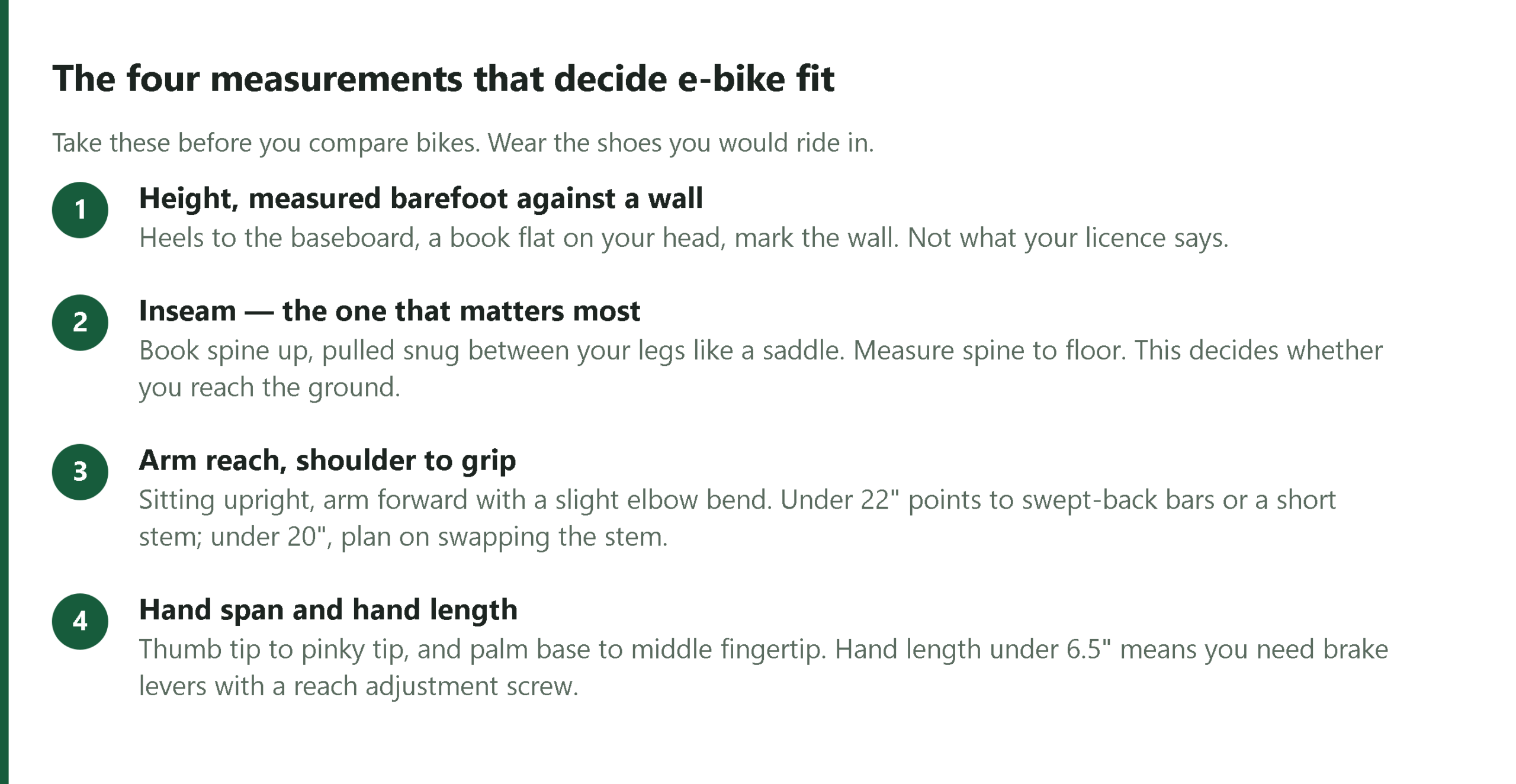
Stand against a wall with your heels touching the baseboard. Place a book flat on top of your head, pressing against the wall. Mark the wall at the bottom of the book. Measure from the floor to the mark. This is your true height — not what your driver’s license says, not what you remember from your last doctor visit. E-bike sizing depends on accuracy here.
Measurement 2: Inseam (The Most Important One)
This is the measurement that determines whether you can reach the ground from the saddle — the single most important fit factor for short riders.
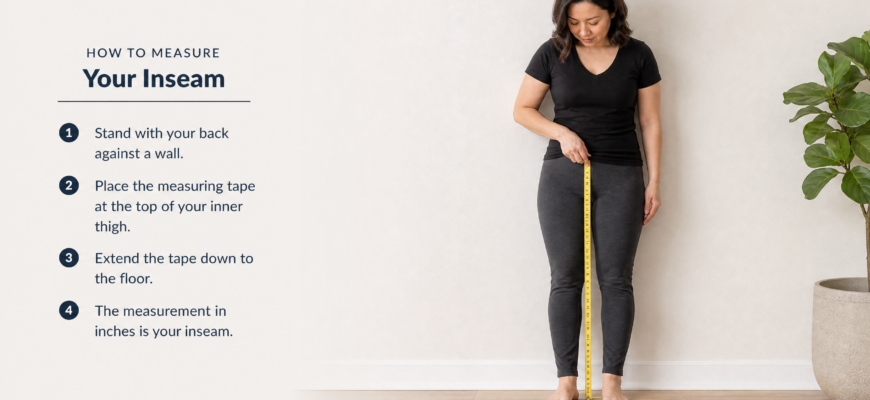
Stand with your back against a wall, feet about 6 inches apart (simulating a bike saddle between your legs). Place the hardcover book between your legs, spine up, and pull it snugly upward — as if it were a bike seat. Have someone measure from the top of the book spine to the floor. That’s your cycling inseam.
Typical inseam ranges for short riders:
| Height | Typical Inseam Range |
|---|---|
| 5’0″ (152 cm) | 26″–28″ |
| 5’1″ (155 cm) | 27″–28.5″ |
| 5’2″ (157 cm) | 27.5″–29″ |
| 5’3″ (160 cm) | 28″–30″ |
| 5’4″ (163 cm) | 28.5″–30.5″ |
| 5’5″ (165 cm) | 29″–31″ |
These are ranges — your individual proportions matter. Someone who’s 5’2″ with a long torso might have a 27″ inseam, while another 5’2″ person with long legs might have 29.5″.
Measurement 3: Arm Reach
Sit on a chair at the edge with your back upright. Extend your arm forward, relaxed, with a slight bend at the elbow. Have someone measure from the back of your shoulder to the center of your grip (where you’d hold handlebars). This estimates your comfortable reach distance.
If your arm reach is under 22″, you’ll want bikes with swept-back handlebars or an adjustable/short stem. If it’s under 20″, prioritize compact geometry and plan to swap the stem. Full reach guide →
Measurement 4: Hand Span
Open your dominant hand flat and measure from thumb tip to pinky tip. Also measure from the base of your palm to your middle fingertip (hand length).
If your hand length is under 6.5″, you likely need adjustable brake levers. Most hydraulic brake levers have a reach adjustment screw — this is a must-have feature for small-handed riders. Mechanical brakes rarely have this adjustment, which is one reason we prefer hydraulic for short riders. Brake lever setup guide →
Your Fit Checklist: Compare These Numbers
Now take your measurements and compare them against any e-bike you’re considering:
| Your Measurement | Compare Against | Rule |
|---|---|---|
| Inseam | Bike’s minimum seat height | Min seat height ≤ your inseam |
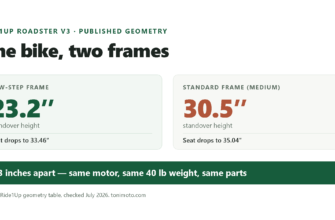
| Inseam | Standover height | Standover ≤ inseam minus 1″ |
| Arm reach | Effective top tube + stem | Reach should feel relaxed, not stretched |
| Hand span | Brake lever reach | Need adjustable levers if hand < 6.5″ |
If a bike passes all four checks on paper, it’s worth a test ride. If it fails any check, move on — unless the issue can be fixed with an affordable swap (shorter stem, adjusted levers).
Can’t Find Minimum Seat Height in the Specs?
More often than not it is published — under a name you would not think to search for. We got this wrong ourselves and had to correct it, so here is what to look for before you conclude it is missing.
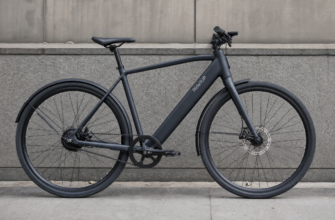
Search for the measurement, not the phrase. Lectric calls it “Seat to Ground” and gives a max and a min. Ride1Up calls it “B – Minimum Seat Height” inside a geometry table that stays collapsed until you open it. Aventon publishes a full geometry table with fourteen rows and no seat height in any of them. Tenways publishes no geometry at all.
Open everything on the product page first. Geometry lives behind accordions labelled Specs, Geometry or Dimensions, and a page search will not see inside one that is closed. Expand every section before you decide the number is absent.
If it genuinely is not there, then try the brand’s support chat and ask for the minimum seat height on the smallest size, check unboxing videos where riders show the saddle slammed, or search owner forums for “[model name] short rider”.
If you still can’t find the number, that’s a red flag. Brands that care about fit make this data available. Sizing chart red flags →
Ready to find your bike? See our fit-first picks →