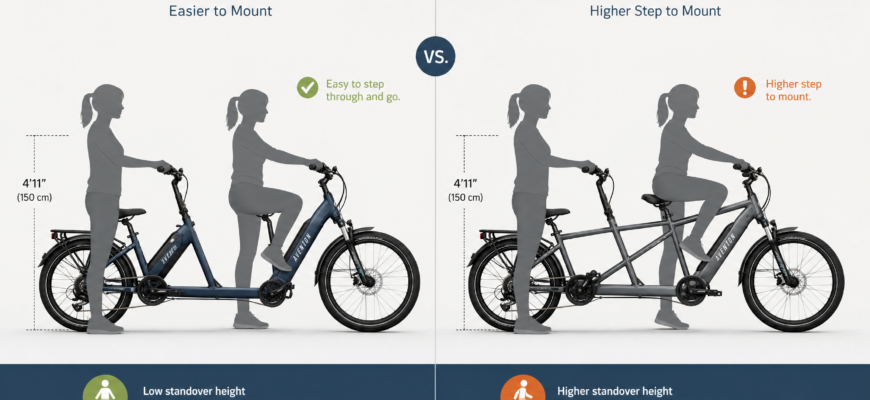
The most common advice for short riders is “get a step-through.” And for good reason — step-through frames eliminate standover concerns, make mounting and dismounting easier, and allow faster foot-down stops in emergencies. But is a step-through always the better choice? Here’s what the frame decision actually comes down to for riders 5’0″–5’5″.
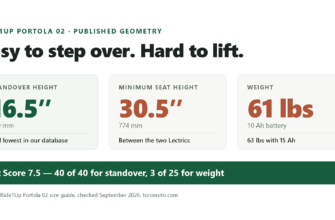
Checking a specific bike? Our e-bike standover height database lists every published standover figure we can source from manufacturer specs, sorted lowest first — plus the popular models that publish no figure at all.
How Much Standover Does the Frame Actually Save?
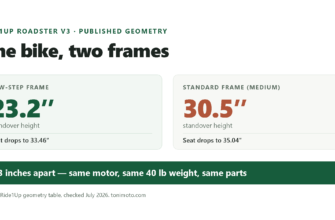
Most frame comparisons put a step-through from one brand next to a step-over from another, which confuses the frame with everything else that differs between two bikes. The Ride1Up Roadster V3 removes that problem: it is sold in a Low-Step frame and a standard frame with the same motor, the same 40 lb weight and the same components. Only the frame changes.

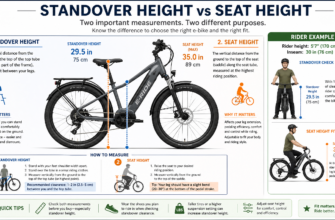
The Low-Step frame publishes a standover of 23.2″. The standard frame publishes 30.5″ in Medium and 31.5″ in Large. That is a gap of 7.3 inches between the two frames on the same bike — more than most riders expect, and more than any saddle or stem adjustment can give back. It is the single largest fit change available to you, and it is decided before you order.
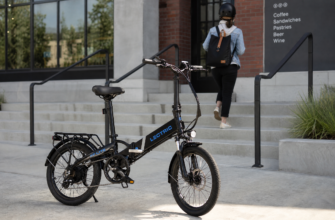
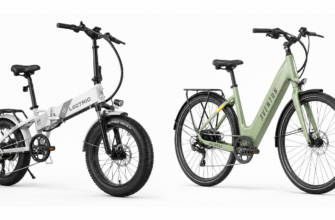
The Lectric XP4 is a second clean pair: Step-Thru and Step-Over frames at the same price and the same published weight. The standover drops from 24" to 19", but the minimum seat height stays at 29.5" on both. A step-through frame lowers the bar you swing a leg over, not the saddle. We compared the two line by line in XP4 Step-Thru vs Step-Over.
Note also what sizing down does not do. Going from Large to Medium on the standard frame buys one inch of standover. Choosing the Low-Step frame buys seven. If you are near the bottom of a brand’s stated height range, the frame decision matters far more than the size decision.
The Case for Step-Through (For Most Short Riders)
Safety at stops: When you need to put a foot down quickly — a car cuts you off, a pedestrian steps out, you need to stop suddenly on a slope — a step-through lets you drop a foot to either side without worrying about clearing the top tube. For a 5’1″ rider on a step-over frame, that half-second of hesitation while you swing a leg over the tube is a real safety concern.
Mounting and dismounting: Getting on and off happens dozens of times per ride. With a step-through, you simply step through the low frame. With a step-over, you swing a leg over the top tube — which requires clearance that short riders may not have, especially when wearing work clothes or carrying a bag.
Clothing flexibility: Step-throughs work with skirts, dresses, stiff jeans, and work attire. Not a minor consideration for daily commuters.
The Case for Step-Over (Specific Situations)
Frame rigidity: Step-over frames are inherently stiffer because the top tube forms a complete triangle. On aggressive riding (fast cornering, rough terrain), this translates to slightly more precise handling. For casual commuting, the difference is negligible with modern step-through designs — but if you’re riding trails or pushing speed, step-over has a structural advantage.
Aesthetics: Some riders simply prefer the traditional diamond-frame look. Modern step-throughs have closed the “style gap” significantly, but personal preference is personal preference.
Availability: Some e-bike models only come in step-over. If a specific bike (motor, features, price) is what you want and it only comes in step-over, check standover clearance carefully rather than dismissing it entirely.
Our Recommendation
For riders under 5’4″: step-through unless you have a specific reason not to. The safety and convenience advantages outweigh the marginal rigidity difference for 95% of riding scenarios. If you’re 5’4″–5’5″ and have a longer inseam, step-over becomes viable if the standover clearance checks out.
The outdated idea that step-throughs are “women’s bikes” or “less serious” is exactly that — outdated. Every major e-bike brand now sells step-throughs as their primary commuter option.